The death of Marat
Jacques-Louis David 1793

The Fighting Temeraire
JMW Turner 1839

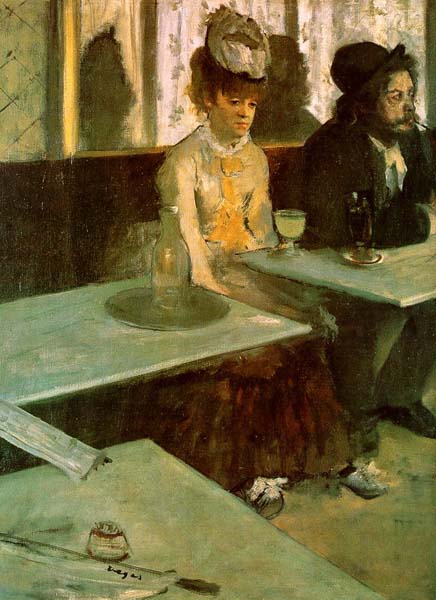
Absinthe drinker in cafe
Edgar Degas 1876
The races
Edgar Degas 1862-1872

Sophie Dahl-YSL Advert
2000

Ophelia
John Everett Mallais1851-1852

Mario Sorrenti-YSL
1999

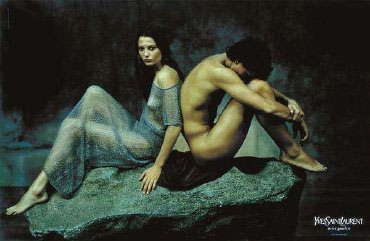

Fading away
Henry Peach Robinson 1858

Water Lilies
Peter Emerson 1886

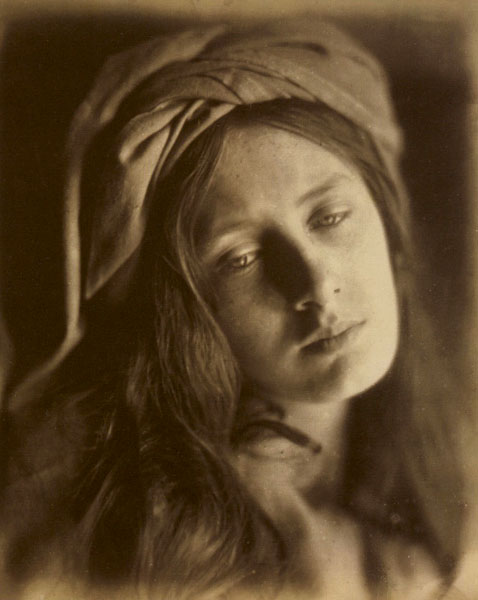
Beatrice
Julia Margaret Cameron 1866
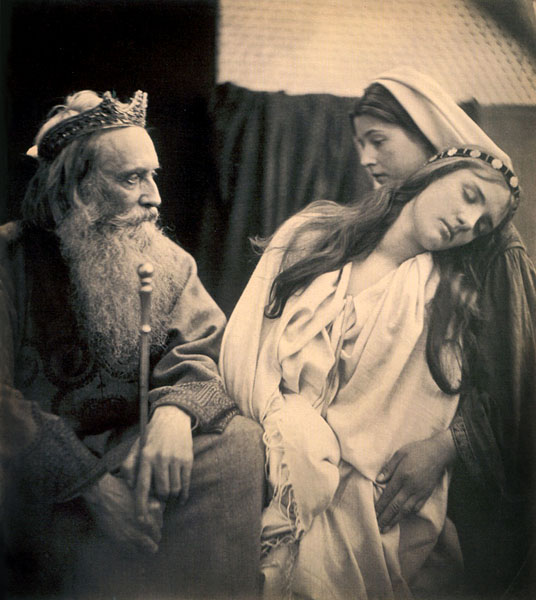
Queen Ester before King Ahasuerus
Julie Margaret Cameron 1865
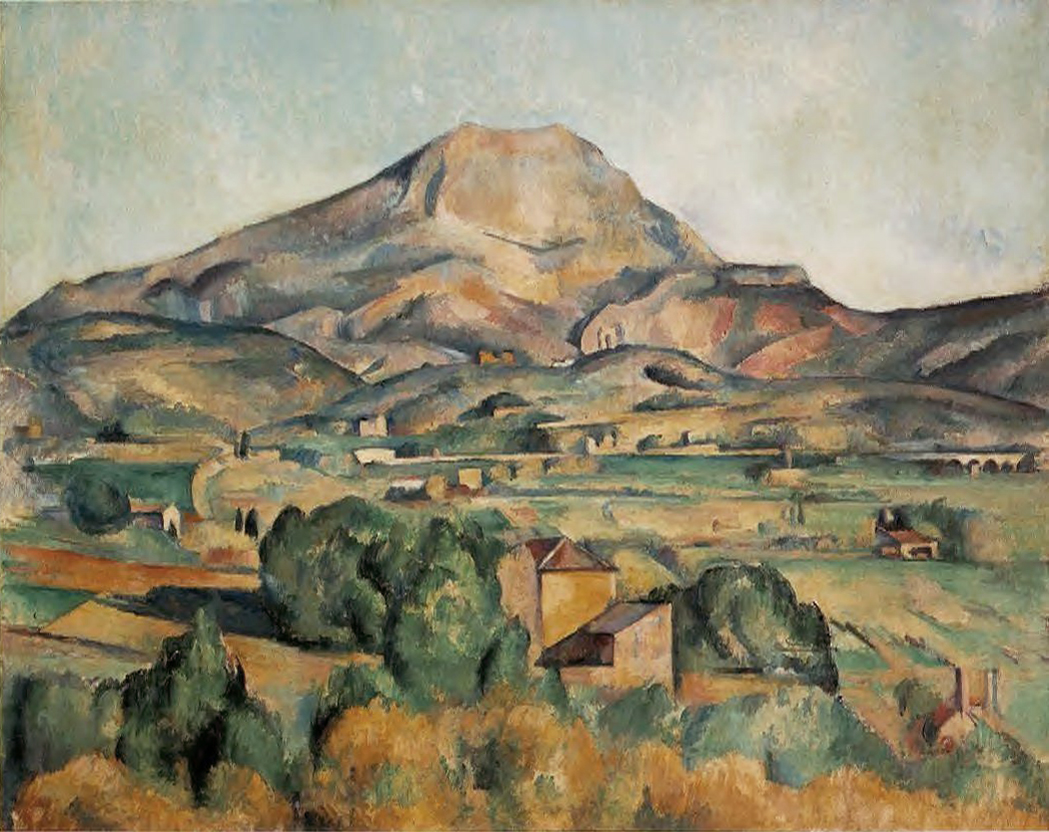
The Barnes Foundation
Paul Cézanne 1985-1995
Station Physiologique
Etienne Maray 1882

Motion Study: Thomas Eakins Nude
Thomas Eakins 1884

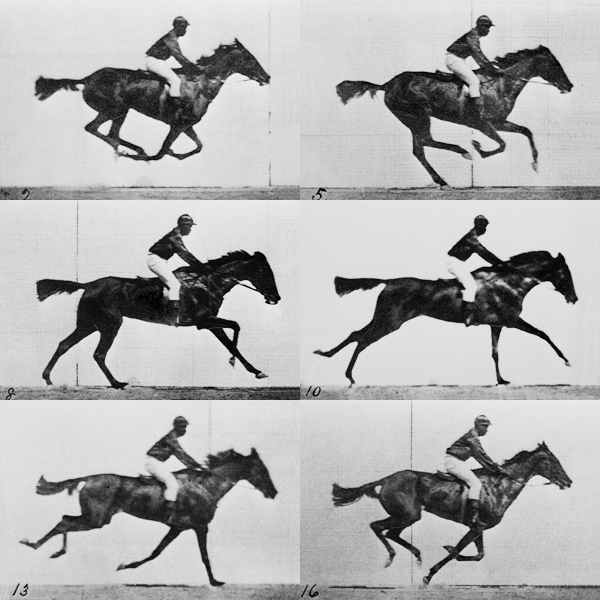
The Horse In Motion
Eadweard Muybridge 1877
Nude Decending A Staircase NO. 2
Marcel Duchamp 1912

Sylvia Von Harden
Otto Dix 1926

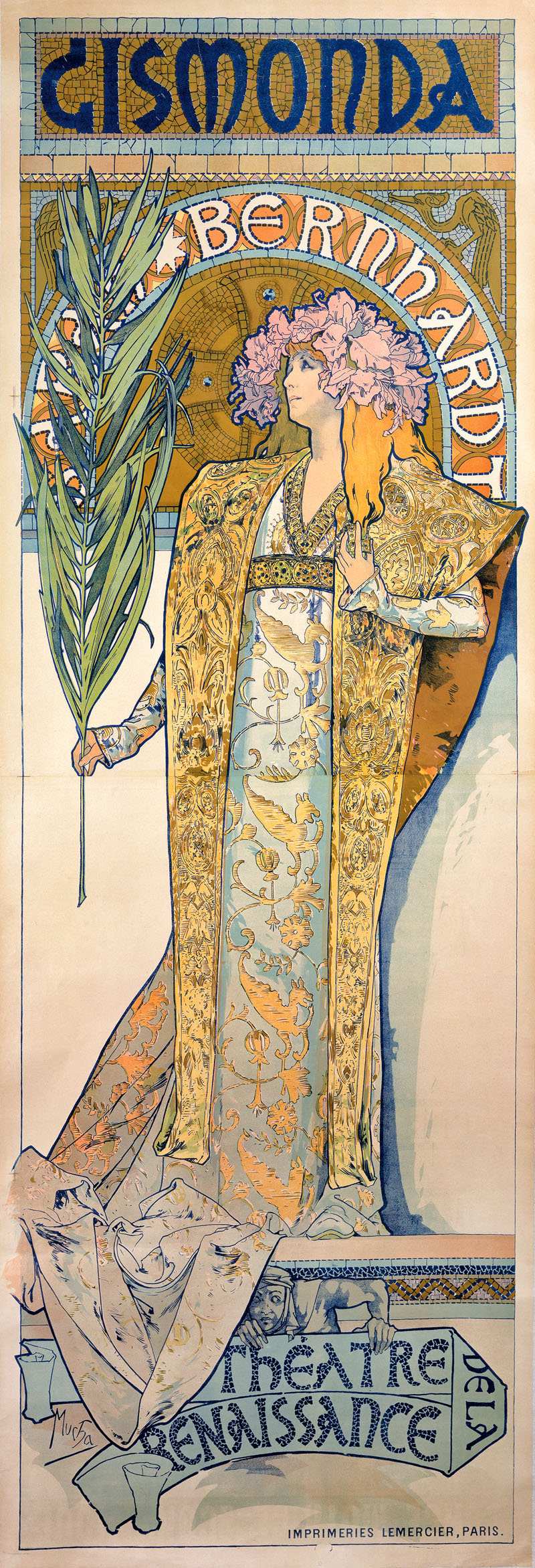
Alphonse Mucha
1894

Aubrey beardsley

Sarah Bernhardt

René Margritte
The Lovers 1928

Alex Majoli
U.S Troops 2003

Alexander Rodchenko
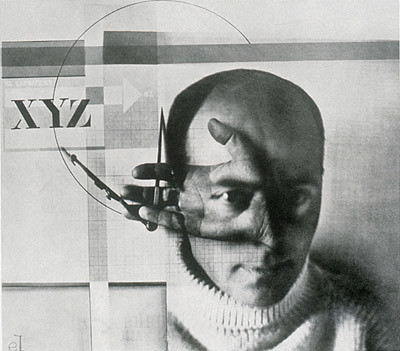
El Lissitzky
The constructor 1924

Robert Howlett
Isambard Kingdom Brunel 1857
this is one of the few images of Isambard Kingdom Brunel. it says allot about the man. although obviously rich, which we can see from his clotheshe is still a working man. it was taking on the boat yard at the building of the great eastern and you can see by the dirt on his trousers that he doesn't have a problem doing the hands work same as the labourers, even though he is the engineer. his stance also reveals that he wants to be seen as a normal man and remove himself from the rich industrialist which he is. the cigar sprouting non-chalantly from his lips shows this aswell as showing his lack of approval for the photographer and the process.
Roger Fenton
Officers in Crimea 1855
this image by Roger Fenton is one of the first examples of photojournalism, taken in 1855 it is a scene taken at the Crimiean war. Although it was journalism there were many restrictions put on fenton. the biggest of these was the fact that they couldn't send back photos of dead british soilders, britan had to see the soilders happy, thay had to think they where in a winnable war. the equitment was also a restriction, after the exposure you had a small segment of time to start developing. these restrictions made it difficult to get images showing true journalism. the closest it got was showing the cannon balls left over from the charge of the light brigade which although shows none of the dead still remains as a haunting image of war.

Mathew Brady
Confederate dead behind the stone wall of Marye's Heights May 1863
This is an example of Mathew Brady's work documenting the american civil war, taken only 8 years after fentons it is remarkably different. rather than fenton Brady set out to document the dead. he was able to do this due to the fact he wasn't being sent there by someone, he simply decided to photograph it. this is one of the first times in history we see death produced in this way, raw and uncensored, the dead sghown where they fall.......or are they. there is some thought about the reality behind bradys photos. there is no doubt that the figure shown are dead and died in the war, although a question mark rests on the thought of whether brady moved the bodies in order to produce a more aesthetic war. although i respect Bradys decision to document the dead for me the idea of these photographys being staged (however small) annoys me due to the fact it loses its impact of true documentation.

Dorothea Lange
Migrant Mother 1936
this image is seen as one of the most important and prolific images of the last 100 years, it was taken in the american depression and shows a single mother who has moved to calafornia, like many, to seek work and a better life. the image shows the disillusionment of the american dream., infact .....or does it. although it is undeniable that it shows a struggling mother in the american depression there are questions raised over this image that damage the integrity that lange always prided herself on having in her photography. the first issue is raised over the name "migrant mother" in fact it is now known that this women is not a migrant worker, she had been living here in this way for ten years and before the depression began, this women is not a "migrant mother" as lange states. lange prided herself on not retouching any of her photograph yet this is the only one to be edited, lange removed the thumb and forefinger. lange also claims that she found the mother, this is in doubt due to the fact her husband had been working in the area for years and would doubtless have known about the family, it is thought that he told her of there existence.
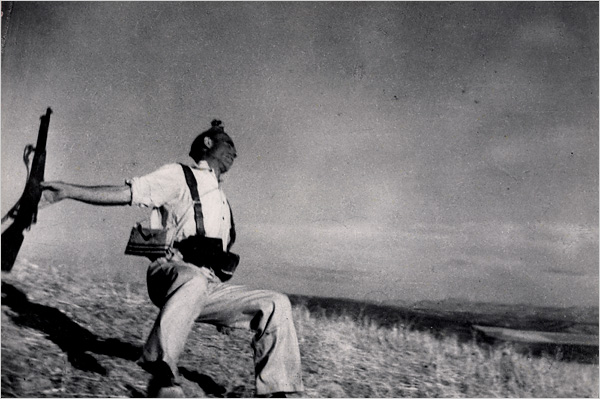
Robert Capa
The Falling Soldier 1936
When most think of war photography for many robert capa defines the idea, and specifically for me this image defines war photography.

The Falling Soldier 1936
When most think of war photography for many robert capa defines the idea, and specifically for me this image defines war photography.
Joe Rosenthal
Raising the flag on Iwo Jima 1945
For Americans this image is the pinnacle of patriotism, it encapsulate the struggle for america and inspired a nation to take up this image as a symbol of the time, there have been statues built in washington dc depicting this scene as well as on stamps and patriot memorabilia. For an image so prolific for being a shining example of what it is to be part of a nation it is incredible that it is staged.
Rosenthal witnessed the event, then asked them to repeat it so he could make a photogragaph of the event. the question is wether this makes it as an authentic piece of journalism. for me journalist photography should be instant, with no staging or doubt in the authenticity of the event. This should have always been classed as a reconstruction of a real event. this event never happened, one very similar to it did.
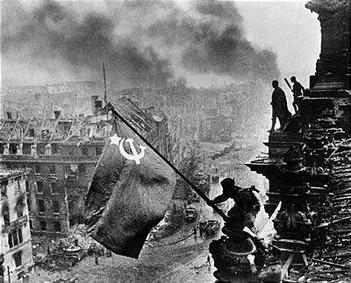
Yevgeny Khaldei
Raising a flag over the Reichstag 1945
This image is taken after the soviet armies march into berlin, russia staged this image after seeing the how well Joe Rosenthal's photograph of Iwo Jima worked to boost american morale. this was created as a piece of propaganda and has no bearing on real events, it is a fiction. for me the specifics of the editing in the image are the most incredible part. the background was changed to give the photograph more of a sense of taking over a city, smoke was added for dramatic effect and troops where placed specifically around the ground. even the officer in the foregrounds watch was edited out to stop people thinking there was looting.

Robert Frank
The Americans 1955-1957
 Gary Winogrand
Untitled 1960

Yevgeny Khaldei
Raising a flag over the Reichstag 1945
This image is taken after the soviet armies march into berlin, russia staged this image after seeing the how well Joe Rosenthal's photograph of Iwo Jima worked to boost american morale. this was created as a piece of propaganda and has no bearing on real events, it is a fiction. for me the specifics of the editing in the image are the most incredible part. the background was changed to give the photograph more of a sense of taking over a city, smoke was added for dramatic effect and troops where placed specifically around the ground. even the officer in the foregrounds watch was edited out to stop people thinking there was looting.
Robert Frank
The Americans 1955-1957
Gary WinograndUntitled 1960
Lee Friedlander
Alburquerque 1975
.jpg) Diane Arbus
Diane Arbus A young man with curlers at home on West 20th Street 1966
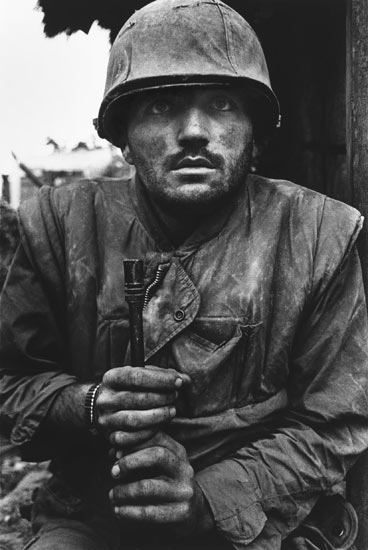
Don McCullin
Shell shocked us marine 1968
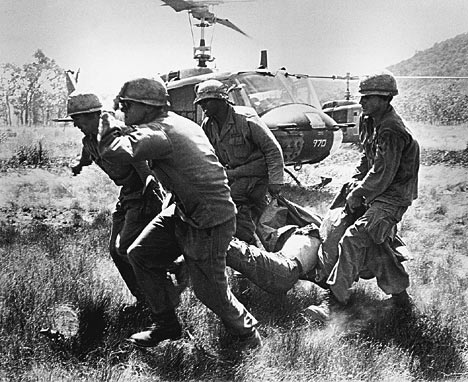
Tim Page

Larry Burrows
1966

Oliviero Toscani
Bennetton 1982-2000
Oliviero toscani's campaign remains a contoversial topic in adverting and the social acceptability of shocking photography. the series started with innocent enough comments on political issues, multi-racial children playing together, a nun and a priest having a secret kiss. toscani then decided how far he was able to push the ide, a series of hearts with black, white and and yellow stamped on them. He seemed to get away with it. the next few years comprised of toscani pushing his ideas forward. the campaign soon became a breeding ground for political issues to be shown on a wide scale, and people started to notice that a concept that started off tounge and cheek was now a disturbing image to look at. A man dying of aids whilst his family grieve at his bedside, an naked anorexic; and for me the most important, men on death row. i beleive all these images should have been shown, and they shouold be shown on a wide scale. i believe the world should be aware and not be allowed to avert there gaze. I do however believe that this MUST be done with no branding, the caption that reads "the united colours of bennetton" is the most offensive thing on there. to put it there is to almost say that it is sponsered, death should never be used to sell.

Dennis Stock
James Dean 1955
This Photograph of James Dean was taken a short time before his death, although there was no way of knowing at the time this photograph is packed with surgestions of what was to come. the most important one for me is the way he is walking away from times square, a symbol of fame and glamour, yet he has his coller pulled up, his head down and walks away with no sense of looking back, rather his stare is looking out of shot at something we can not see. the rain surgest the bleak way he see's his own fame (something he was not comfortable with). he is also walking away from the Astis a theatre famed for well known actor's to come too, he is litteraly walking away from his profession and the fame and high life he was thrown into. dressed all in black he cuts a dark figure with his shadow more of a ghost infront of him. the tops of the buildings behind him fade into mist, surgesting that that part of his life is behind him and is now becoming distant. His foot is raised, about to take the next step.

Alfred Steiglitz
The Steerage 1907
this image by alfred stieglitz is, for me, one of the earliest images open for a analytical review. taken on a boat travelling from new york to germany it shows quite clearly the concept of class, the upper class are clearly looking down at the lower class with a strong divide between the two both socialliy and phisycally. one thing that strikes me in this image is the sense of singularity the upperclass seem to portray, they form a crowd of individuals where as the lower class seem to become lost in the shadows and less disinguishable. i see this image as one of the earliest examples of social documentary, for me it shows a level of diplomacy sometimes missed in photographs from so early on.

Albrecht Durer
Self portrait Circa 1500
Important due to the fact he signed it with his own name, a mark of individuality which was rare at the time.

Yousuf Karsh
Winston Churchill 1941

Richard Avedon
George Bush senior
For two of the most famous portaiture photographers Avedon and Karsh's styles differ greatly, Avedon Claims that everything must be white whilst karsh notes the importance of setting with people. avedon would talk with his subject whilst shooting when karsh did tyhings like went up to churchill and plucked the cigar from his lips making him grumpy.Karsh lets the surgestion of setting intervene with the perception of the subject he is photographing while avedon goes to great lengths to let the person show them true selves and uses them to show themselves.

Zed Nelson is an influencial british photographer still working today, his most recent body of work invovled photographing working people around britan, much like August Sander . the process in which he went about it was much like avedon, rather than making them come in to a studio he chose to take a backdrop to the location, in my opinion this makes the images much more real, and the fact you know it is a location shot makes you see the reality of the job.

No comments:
Post a Comment