Tuesday, 14 December 2010

COLOUR PROJECT

Colour has always been my preferred way of photography, specifically the use of colour film. i prefer the effect and the overall  look of colour photographs, from when i first became interested in photographs colour always appealed to me more. some of my favorite photographs are those of......

William Eggleston


working with colour film and using the dye transfer to saturate his image's eggleston capture the colour and style of the time beautifully, documenting life around him his concepts are ones which i find relate to mine.

Stephen Shore


Travelling across america with a large format camera shore's photographs are ones i don't feel have as much of a zeitgeist to them yet i still feel they are wonderful examples of colour photography.
Gregory Crewdson


Crewdsons constructed photographs of america are ones i find mesmerising in there detail and narrative.they look like film stills and make the veiwer feel smaller. however i beleive Crewdson is more about the visual than concepts and for this reason i don't enjoy his work as much as i could, also the way they are so highly constructed puts me off them a bit aswell.

Richard Billingham


Billingham is a photographer i greatly admire, with little understanding behind the workings of his camera he is able to capture moments in a more unique way than other photographers. his photographs documenting his father are ones which are harsh yet beautiful catching a life misunderstood and shunned by society and everything around the life, including the color.

The idea for my project is to document the way somebody lives, much in the same way Richard Billingham has, yet i won't photograph the person who lives like this. The end result will hopefully allow people to build up a picture of the person who lives this way. I like the idea of being able to take a portrait of a person without the person being in it.

My veiw of the way i want the photogrpahs to look is quite simple, i want desaturation in the colours acheived by using the expired film due to its grainy quality. i also want the compisition to seem imediate to give the sense of someones eyesight. i will try to cut things in half at the edges aswell to get a sense of periphery. i will shoot everything from my own eyeline to further the idea of vision. hopefully by using these techniques i will be able to acheive images which look like eyesight with fading vision giving more strenght to my idea as i plan to shoot the images at my grandmothers house and eyesight is one of the things she struggles with the most.

i went to my grandmothers house and photograhed her house, i was careful not to touch anything, to photograph it exactly as it was. i feel the idea of building up a picture of the person without photographing them was successful. what i didn't expect was the contrast between old and new, the 50's decor clashing with nhs standard comode railings. this coupled with my expired film and colour darkroom practice lead to a series of images depicting the idea of age and fading away which i am very pleased with.
the most important part for me was that these photo's should be as diplomatic and unbiased as possinble, i didn't want to photograph in a way that showed then as either bad or good, simply what they are. i wanted the way you see it to give you an understanding on how you see the object and setting rather than my veiw of it.

i have produced three final images for this project, each one with a main colour that takes it over.
the first is the one dominated by yellow, it depicts a toilet and bath, the bath has a modern dissability chair to aid you with washing. i took two shots of this. one with flash and one without, i chose to print the one without after selecting the other images i wanted to print, none of these had flah and i didn't want one to stand out more than the others. apart from the modern chair in the bath the bathroom was as i remembered it as a child, i was very careful not to make any changes to the room because of this the print is exactly as it would have been years ago, apart from the intrusion of the chair in the bath tub. i feel that the eyesight angle i used with this shot really gave it the sense of immediacy i wanted from all the images.

The second image i produced was a shot of the downstairs bathroom, with this the dominant colour is pink. there is a curtain running through the center of the image. on one side of this curtain there is brightness, on the other the room turns dark. i can't help but feel this sums up the nature of the house, once you remove the veil there is a dark exsistence to be seen. as with the others i made sure not to change any part of the room, and with this room more than any there remains no change, it is the same as i remember it as a small child.

the last image is dominated by green it relates to the first by being a downward eye shot, it is of the kitchen an shows a cooker and preparation area. again there is a general theme of aged furnishings which is then set asqew by the modern electric cooker. there is an empty used pan on the cooker which for me surgest the sense of a person lining here yet cooking for one. as with the others i didn't change any part of the room and the print is completely faithful to the real life within the home.

i beleive out of all the artists i have looked at for this project i have been most inspired both, conceptually and aesthetically, by richard billingham. his idea of documenting a figure of his family was one that i found quite moving and got me thinking about the people close to me that would make interesting subjects to document.

If i chose to carry the project on i would do so by spending allot more time at my grandma's house, studying and photographing the slight changes occuring and try and build up a bigger and less diluted version of the way she lives.

Thursday, 11 November 2010

my lighting


I went for my own custom lighting sesind designed to give me the sort of sillouettes i wanted to acheive. the Honeycoombe snoot meant that the light was less diffused and was more direct, meaning greater definition in the shadows. i chose to shoot on colour as i felt it would look more aesthetically pleasing, black and white wouldn't have gone well with this sort of lighting.

for the second one i wanted to shoot the model out of focus so that when the text went on it would create a false sense of depth of feild. i aslo wante the lighing to be more revealing yet due to it being out of focus it would still conceal the model.

Studio Lighting Techniques

This gives the effect of the subject having little to
 no shadow, and the background is pure white.

This gives the effect of the subject having little to
 no shadow, and the background is pure black.

this gives the subject light shadows on one side of the face but also seperates the subject from the background (black) with the honey coombe snoot.
this gives a darker more serious quality to the image, black background and a contrast between the highlightsto one side and the shadows to the other.


This gives the effect of deep shadows over the face yet high lights to the side of the head.


this gives the effect of splitting the subject into highlights and then deep shadow.


Tuesday, 9 November 2010

The shoot

I have now done my shoot for the text and image project, it went well,
 I shot a series of silhouettes, with the intention of getting allot of negative
 space on which my model could write. The model was a friend, I felt that
 they would be perfect for this project, not because of the way they look,
but from what I know about the way there mind works. I feel the words he
wrote and the style in which they where written where extremely reflective
of what they where going through at the time. For the final image I did
intervene on what he wrote on it, I asked him to write something more vulnerable
, something which people wouldn’t expect of him, he wrote

“I wish I could find someone who brings out the real me again”

If I was to compare it to someone I would say it was similar to
Jim Goldberg’s work, although the difference is with the style,
I produced more graphic images without location, also mine is 
a series with the same person and is altogether less personal and
specific than his work.I am really happy with what I produced.
I also went for a more subtle style of text, rather than asking him to
write his life story i asked for just a statement, giving the words, when
combined with the image a more poetic feel.
I thought I would find it difficult to work in the confines of a studio,
and it was, but I feel like I have learnt a great deal after this.
The part that I feel is the weekest about my project is the large prints
, because I had to scan in

F-stop 8
light meter reads 8.01

F-stop 5.6
light meter reads 5.6

F-stop 8
light meter reads 8.00

F-stop 5.6
light meter reads 5.6

Evaluation

although i do like these images i feel as if they are purely to satisfy the projects requirements, if i had had more freedom i would have produced a similar series but on location with natural lighting. i feel that the constraints of the studio, while teaching me a new technique's which i may choose to use for other projects, didn't convey my idea in the way i thought it would. to progress this project i would take it to the streets and photograph more than one person, yet continue the way of writing on them. this project has taught me allot about studio ( and in a way day) lighting, and i feel i have produced an interesting group of images.

possible text for images.....

HOUGH three men dwell on Flannan Isle
To keep the lamp alight,
As we steer'd under the lee, we caught
No glimmer through the night!
 
A passing ship at dawn had brought
The news; and quickly we set sail,
To find out what strange thing might all
The keepers of the deep-sea light.
 
The winter day broke blue and bright,
With glancing sun and glancing spray,
As o'er the swell our boat made way,
As gallant as a gull in flight.
 
But, as we near'd the lonely Isle;
And look'd up at the naked height;
And saw the lighthouse towering white,
With blinded lantern, that all night
Had never shot a spark
Of comfort through the dark,
So ghastly in the cold sunlight
It seem'd, that we were struck the while
With wonder all too dread for words.
 
And, as into the tiny creek
We stole beneath the hanging crag,
We saw three queer, black, ugly birds--
Too big, by far, in my belief,
For guillemot or shag--
Like seamen sitting bold upright
Upon a half-tide reef:
But, as we near'd, they plunged from sight,
Without a sound, or spurt of white.
 
And still too mazed to speak,
We landed; and made fast the boat;
And climb'd the track in single file,
Each wishing he was safe afloat,
On any sea, however far,
So it be far from Flannan Isle:
And still we seem'd to climb, and climb,
As though we'd lost all count of time,
And so must climb for evermore.
Yet, all too soon, we reached the door--
The black, sun-blister'd lighthouse door,
That gaped for us ajar.
 
As, on the threshold, for a spell,
We paused, we seem'd to breathe the smell
Of limewash and of tar,
Familiar as our daily breath,
As though 'twere some strange scent of death:
And so, yet wondering, side by side,
We stood a moment, still tongue-tied:
And each with black foreboding eyed
The door, ere we should fling it wide,
To leave the sunlight for the gloom:
Till, plucking courage up, at last,
Hard on each other's heels we pass'd
Into the living-room.
 
Yet, as we crowded through the door,
We only saw a table, spread
For dinner, meat and cheese and bread;
But all untouch'd; and no one there:
As though, when they sat down to eat,
Ere they could even taste,
Alarm had come; and they in haste
Had risen and left the bread and meat:
For on the table-head a chair
Lay tumbled on the floor.
We listen'd; but we only heard
The feeble cheeping of a bird
That starved upon its perch:
And, listening still, without a word,
We set about our hopeless search.
 
We hunted high, we hunted low,
And soon ransack'd the empty house;
Then o'er the Island, to and fro,
We ranged, to listen and to look
In every cranny, cleft or nook
That might have hid a bird or mouse:
But, though we searched from shore to shore,
We found no sign in any place:
And soon again stood face to face
Before the gaping door:
And stole into the room once more
As frighten'd children steal.
 
Aye: though we hunted high and low,
And hunted everywhere,
Of the three men's fate we found no trace
Of any kind in any place,
But a door ajar, and an untouch'd meal,
And an overtoppled chair.
 
And, as we listen'd in the gloom
Of that forsaken living-room--
O chill clutch on our breath--
We thought how ill-chance came to all
Who kept the Flannan Light:
And how the rock had been the death
Of many a likely lad:
How six had come to a sudden end
And three had gone stark mad:
And one whom we'd all known as friend
Had leapt from the lantern one still night,
And fallen dead by the lighthouse wall:
And long we thought
On the three we sought,
And of what might yet befall.
 
Like curs a glance has brought to heel,
We listen'd, flinching there:
And look'd, and look'd, on the untouch'd meal
And the overtoppled chair.
 
We seem'd to stand for an endless while,
Though still no word was said,
Three men alive on Flannan Isle,
Who thought on three men dead.
this is a poem which i find really moving, i think it shows the capability of man, and how loneliness and isolation affect people. this is the sort of thing i would like to do, yet i am not sure it would be appropriate for a studio project.

Tuesday, 2 November 2010

Contextual influences in photography

The death of Marat
 Jacques-Louis David 1793
The Fighting Temeraire
JMW Turner 1839
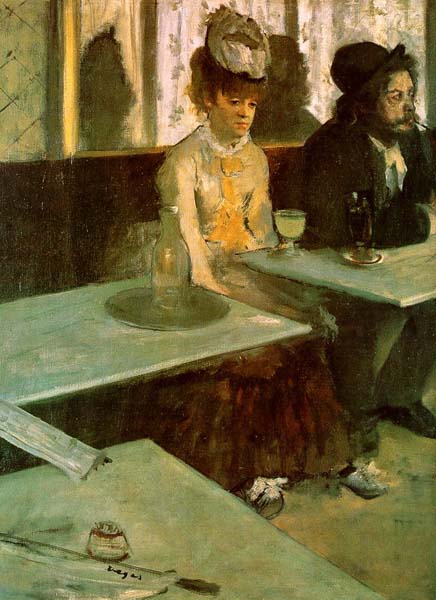
Absinthe drinker in cafe
Edgar Degas 1876

The races
Edgar Degas 1862-1872
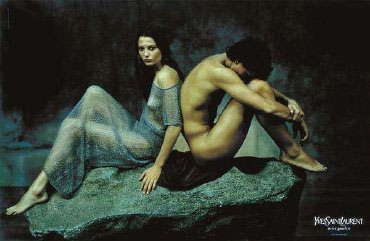
Sophie Dahl-YSL Advert
2000
Ophelia
John Everett Mallais1851-1852

Mario Sorrenti-YSL
1999
Fading away
Henry Peach Robinson 1858
Water Lilies
Peter Emerson 1886
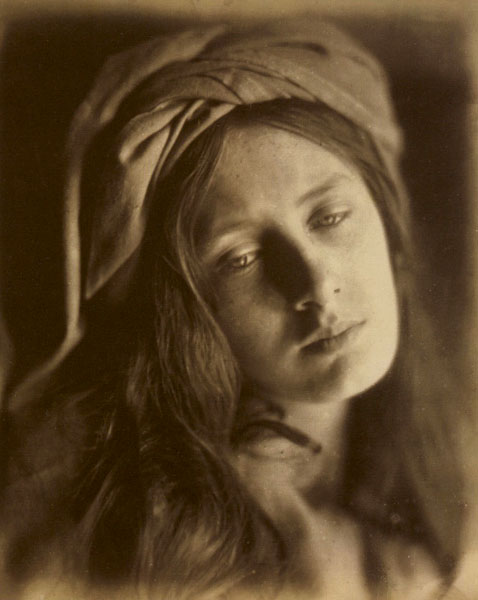
Beatrice
Julia Margaret Cameron 1866
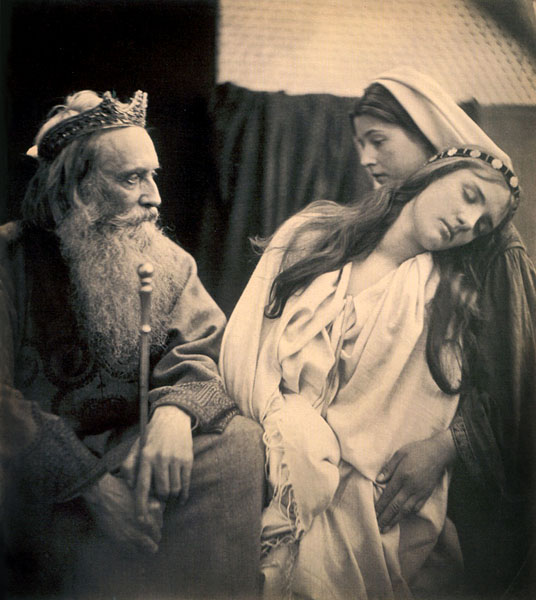
Queen Ester before King Ahasuerus
Julie Margaret Cameron 1865
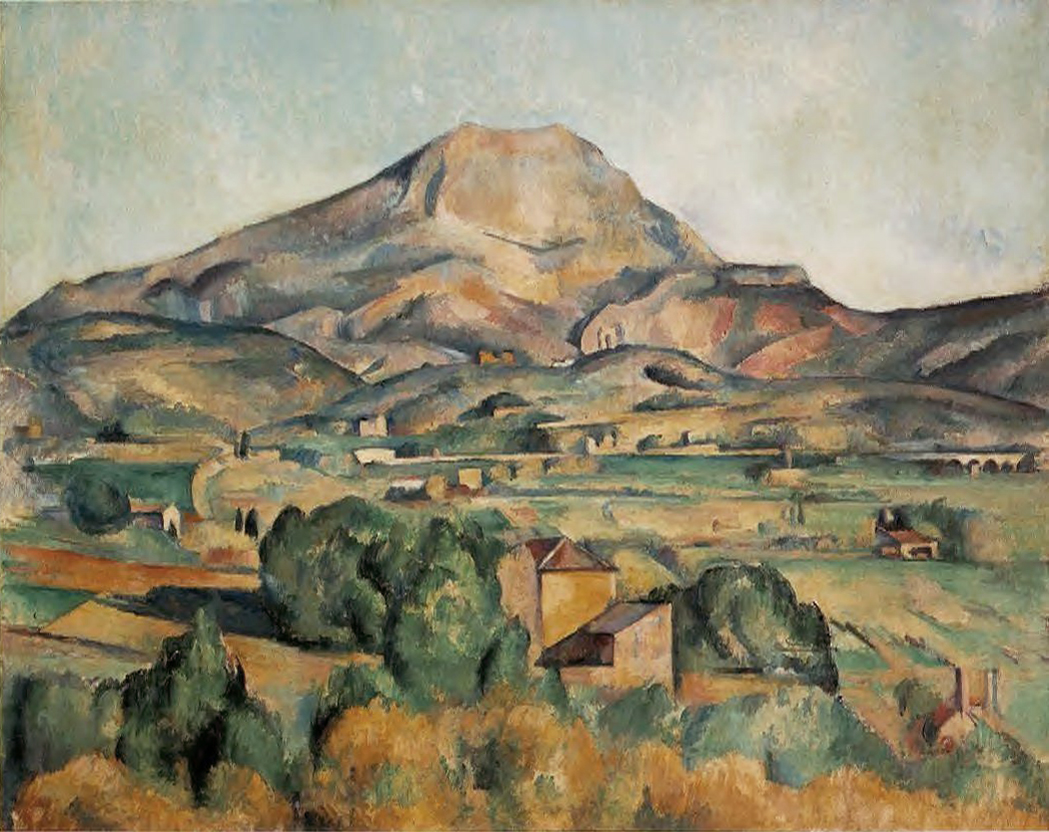
The Barnes Foundation
Paul Cézanne 1985-1995
Station Physiologique
Etienne Maray 1882
Motion Study: Thomas Eakins Nude
Thomas Eakins 1884
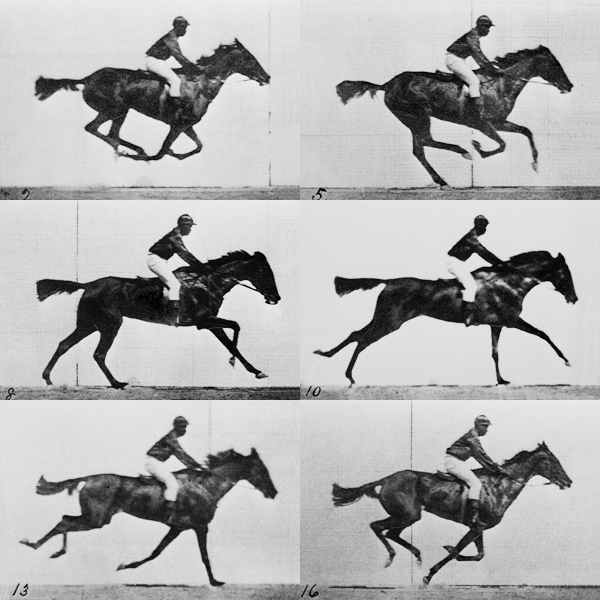
The Horse In Motion
Eadweard Muybridge 1877
Nude Decending A Staircase NO. 2
Marcel Duchamp 1912


Sylvia Von Harden
Otto Dix 1926


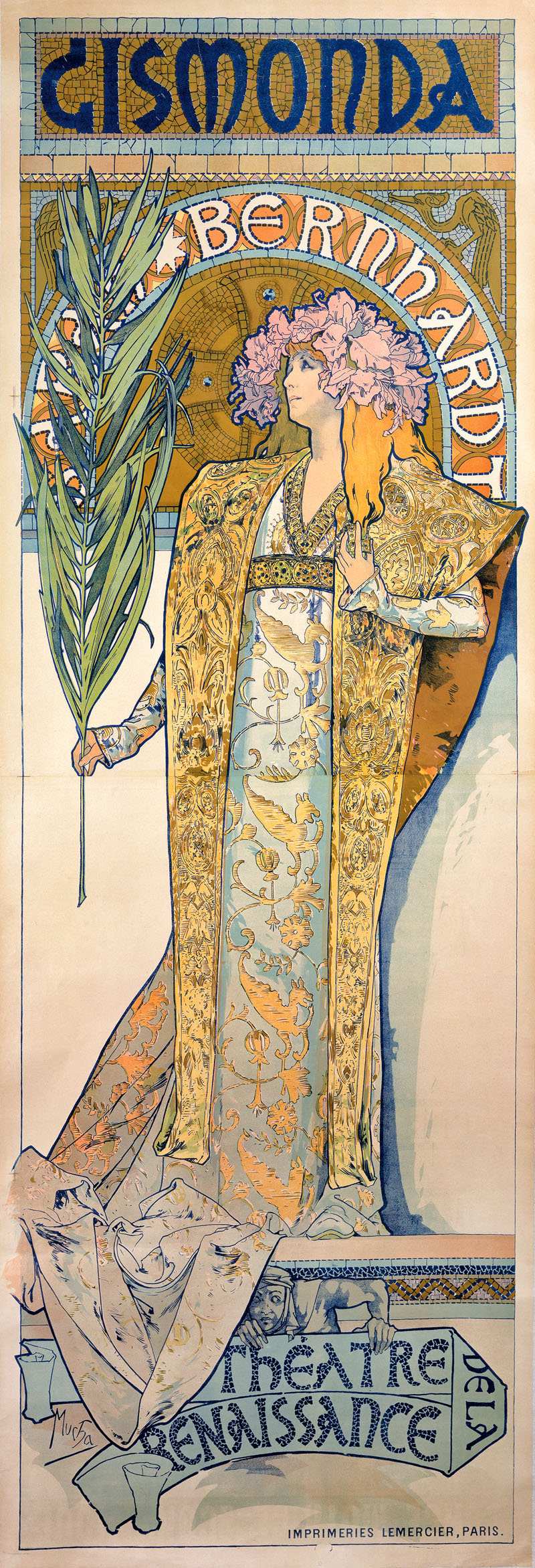
Alphonse Mucha
1894
Aubrey beardsley

 Sarah Bernhardt


René Margritte
The Lovers 1928

majoli_05.jpg
Alex Majoli
U.S Troops 2003

Alexander Rodchenko

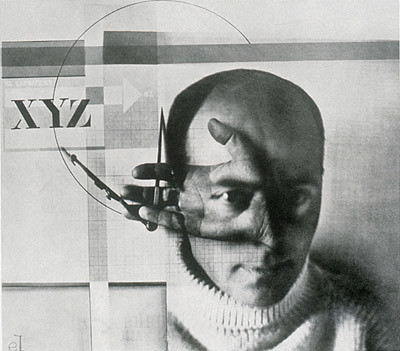
El Lissitzky
The constructor 1924

Robert Howlett
Isambard Kingdom Brunel 1857
this is one of the few images of Isambard Kingdom Brunel. it says allot about the man. although obviously rich, which we can see from his clotheshe is still a working man. it was taking on the boat yard at the building of the great eastern and you can see by the dirt on his trousers that he doesn't have a problem doing the hands work same as the labourers, even though he is the engineer. his stance also reveals that he wants to be seen as a normal man and remove himself from the rich industrialist which he is. the cigar sprouting non-chalantly from his lips shows this aswell as showing his lack of approval for the photographer and the process.

 
Roger Fenton
Officers in Crimea 1855
this image by Roger Fenton is one of the first examples of photojournalism, taken in 1855 it is a scene taken at the Crimiean war. Although it was journalism there were many restrictions put on fenton. the biggest of these was the fact that they couldn't send back photos of dead british soilders, britan had to see the soilders happy, thay had to think they where in a winnable war. the equitment was also a restriction, after the exposure you had a small segment of time to start developing. these restrictions made it difficult to get images showing true journalism. the closest it got was showing the cannon balls left over from the charge of the light brigade which although shows none of the dead still remains as a haunting image of war.

Mathew Brady
Confederate dead behind the stone wall of Marye's Heights May 1863
This is an example of Mathew Brady's work documenting the american civil war, taken only 8 years after fentons it is remarkably different. rather than fenton Brady set out to document the dead. he was able to do this due to the fact he wasn't being sent there by someone, he simply decided to photograph it. this is one of the first times in history we see death produced in this way, raw and uncensored, the dead sghown where they fall.......or are they. there is some thought about the reality behind bradys photos. there is no doubt that the figure shown are dead and died in the war, although a question mark rests on the thought of whether brady moved the bodies in order to produce a more aesthetic war. although i respect Bradys decision to document the dead for me the idea of these photographys being staged (however small) annoys me due to the fact it loses its impact of true documentation.


Dorothea Lange
Migrant Mother 1936
this image is seen as one of the most important and prolific images of the last 100 years, it was taken in the american depression and shows a single mother who has moved to calafornia, like many, to seek work and a better life. the image shows the disillusionment of the american dream., infact .....or does it. although it is undeniable that it shows a struggling mother in the american depression there are questions raised over this image that damage the integrity that lange always prided herself on having in her photography. the first issue is raised over the name "migrant mother" in fact it is now known that this women is not a migrant worker, she had been living here in this way for ten years and before the depression began, this women is not a "migrant mother" as lange states. lange prided herself on not retouching any of her photograph yet this is the only one to be edited, lange removed the thumb and forefinger. lange also claims that she found the mother, this is in doubt due to the fact her husband had been working in the area for years and would doubtless have known about the family, it is thought that he told her of there existence.


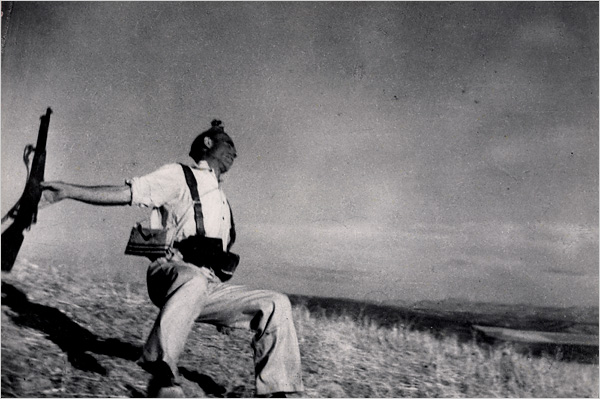
Robert Capa
The Falling Soldier 1936
When most think of war photography for many robert capa defines the idea, and specifically for me this image defines war photography.


Joe Rosenthal
Raising the flag on Iwo Jima 1945
For Americans this image is the pinnacle of patriotism, it encapsulate the struggle for america and inspired a nation to take up this image as a symbol of the time, there have been statues built in washington dc depicting this scene as well as on stamps and patriot memorabilia. For an image so prolific for being a shining example of what it is to be part of a nation it is incredible that it is staged.
Rosenthal witnessed the event, then asked them to repeat it so he could make a photogragaph of the  event. the question is wether this makes it as an authentic piece of journalism. for me journalist photography should be instant, with no staging or doubt in the authenticity of the event. This should have always been classed as a reconstruction of a real event. this event never happened, one very similar to it did.


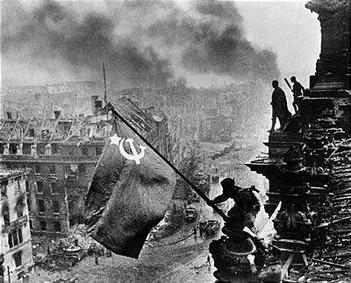
Soviet_flag_on_the_Reichstag_roof_Khaldei.jpg (400×323)


Yevgeny Khaldei
Raising a flag over the Reichstag 1945
This image is taken after the soviet armies march into berlin, russia staged this image after seeing the how well Joe Rosenthal's photograph of Iwo Jima worked to boost american morale. this was created as a piece of propaganda and has no bearing on real events, it is a fiction. for me the specifics of the editing in the image are the most incredible part. the background was changed to give the photograph more of a sense of taking over a city, smoke was added for dramatic effect and troops where placed specifically around the ground. even the officer in the foregrounds watch was edited out to stop people thinking there was looting.  


Robert Frank
The Americans 1955-1957

Gary Winogrand
Untitled 1960


Lee Friedlander
Alburquerque 1975

Diane Arbus
A young man with curlers at home on West 20th Street 1966

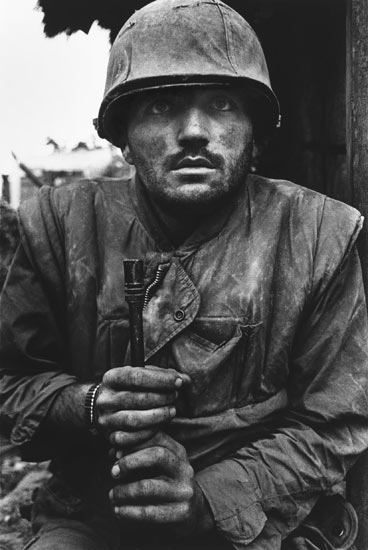
Don McCullin
Shell shocked us marine 1968


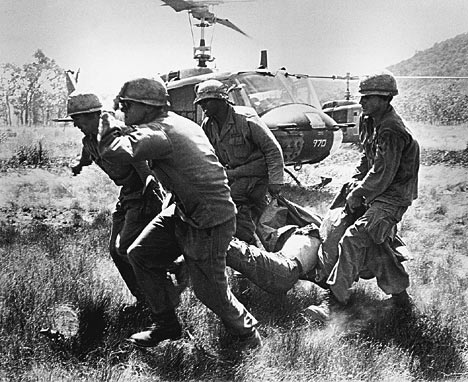
Tim Page

 
Larry Burrows
1966


Oliviero Toscani
Bennetton 1982-2000
Oliviero toscani's campaign remains a contoversial topic in adverting and the social acceptability  of shocking photography. the series started with innocent enough comments on political issues, multi-racial children playing together, a nun and a priest having a secret kiss. toscani then decided how far he was able to push the ide, a series of hearts with black, white and and yellow stamped on them. He seemed to get away with it. the next few years comprised of toscani pushing his ideas forward. the campaign soon became a breeding ground for political issues to be shown on a wide scale, and people started to notice that a concept that started off tounge and cheek was now a disturbing image to look at. A man dying of aids whilst his family grieve at his bedside, an naked anorexic; and for me the most important, men on death row. i beleive all these images should have been shown, and they shouold be shown on a wide scale. i believe the world should be aware and not be allowed to avert there gaze. I do however believe that this MUST be done with no branding, the caption that reads "the united colours of bennetton" is the most offensive thing on there. to put it there is to almost say that it is sponsered, death should never be used to sell.

Dennis Stock
James Dean 1955
This Photograph of James Dean was taken a short time before his death, although there was no way of knowing at the time this photograph is packed with surgestions of what was to come. the most important one for me is the way he is walking away  from times square, a symbol of fame and glamour, yet he has his coller pulled up, his head down and walks away with no sense of looking back, rather his stare is looking out of shot at something we can not see. the rain surgest the bleak way he see's his own fame (something he was not comfortable with). he is also walking away from the Astis a theatre famed for well known actor's to come too, he is litteraly walking away from his profession and the fame and high life he was thrown into. dressed all in black he cuts a dark figure with his shadow more of a ghost infront of him. the tops of the buildings behind him fade into mist, surgesting that that part of his life is behind him and is now becoming distant. His foot is raised, about to take the next step.

File:Stieglitz-Steerage291.jpg

Alfred Steiglitz
The Steerage 1907
this image by alfred stieglitz is, for me, one of the earliest images open for a analytical review. taken on a boat travelling from new york to germany it shows quite clearly the concept of class, the upper class are clearly looking down at the lower class with a strong divide between the two both socialliy and phisycally. one thing that strikes me in this image is the sense of singularity the upperclass seem to portray, they form a crowd of individuals where as the lower class seem to become lost in the shadows and less disinguishable. i see this image as one of the earliest examples of social documentary, for me it shows a level of diplomacy sometimes missed in photographs from so early on.


Albrecht Durer
Self portrait Circa 1500
Important due to the fact he signed it with his own name, a mark of individuality which was rare at the time.


Yousuf Karsh
Winston Churchill 1941


Richard Avedon
George Bush senior

For two of the most famous portaiture photographers Avedon and Karsh's styles differ greatly, Avedon Claims that everything must be white whilst karsh notes the importance of setting with people. avedon would talk with his subject whilst shooting when karsh did tyhings like went up to churchill and plucked the cigar from his lips making him grumpy.Karsh lets the surgestion of setting intervene with the perception of the subject he is photographing while avedon goes to great lengths to let the person show them true selves and uses them to show themselves.


Zed Nelson is an influencial british photographer still working today, his most recent body of work invovled photographing working people around britan, much like August Sander . the process in which he went about it was much like avedon, rather than making them come in to a studio he chose to take a backdrop to the location, in my opinion this makes the images much more real, and the fact you know it is a location shot makes you see the reality of the job.